The board of directors you, the owner, never had.
Private Board is a closed table of ten Portuguese business owners, each with more than €500k in EBITDA, meeting three times a year under Rui’s chairmanship. Each one acts as a shadow investor to the other nine. Each one is accountable to the table. The first edition opens in 2027.
Business owners who control
their own companies
have no one to answer to.
If you have shareholders, you answer to shareholders. If you have a board, you answer to the board. But when you are the shareholder and you are the board, who do you answer to?
Most Portuguese owners at this tier are in exactly this position. They have absolute control. They have no counterweight. The heavy decisions, whether to sell, hand over, scale or step away, get taken in internal conversations or in silence. And it is in that silence that a great deal goes wrong.
Private Board is an answer to that vacuum. Ten owners at your level, acting as your board. A Chairman presiding. A method that forces you to lay the business bare, decide in front of the table, and account for what you promised a hundred days later.
“It is as if each of them owned a million-euro stake in your company. Without owning it, but acting as though they did.”
The table is not for everyone.
It only makes sense if three things are true.
You control the decision.
You are the founder or majority shareholder. When the table debates a sale, you are the one who signs. There are no intermediaries and no real board to approve it, and that is exactly why you are here.
You have real scale.
Your company generates more than €500k in EBITDA a year. You are past the stage of proving it exists; now you are deciding what comes next. What you lose or gain on a wrong decision is measured in millions, not thousands.
You are willing to be held to account.
The table is not here just to validate you. It is here to confront you with your own execution. Anyone who only wants applause or inspiration does not belong on this board.
Owners of their own companies
are rarely confronted
with reality.
In almost two decades of building companies, I learned something nobody tells you at the start: the problem is rarely a lack of information. It is a lack of mirror.
When you are the shareholder, the board and the CEO all at once, you walk around with a mark on your forehead that everyone sees except you. Or worse: you walk around with bad breath, and the closer someone stands, the more they smell it. But nobody tells you.
Your partners do not tell you because they depend on the relationship. Your team does not tell you because they depend on the salary. Your family does not tell you because they love you. And when someone does risk saying it, often you can no longer hear it, because you decided long ago that nobody understands your business as well as you do.
Private Board is the place where they tell you. Where there is no dependency. Where there is no fear. Where the only rule is that each of the nine peers at the table looks at you as though they owned a million-euro stake in your company, and tells you what they would see from that seat. No decoration. No care taken. No pity.
The difference between selling well and selling badly, between handing over with method or destroying what you built, between scaling and imploding, that difference is rarely in what you know. It is in who confronts you, with real weight, while there is still time to listen.
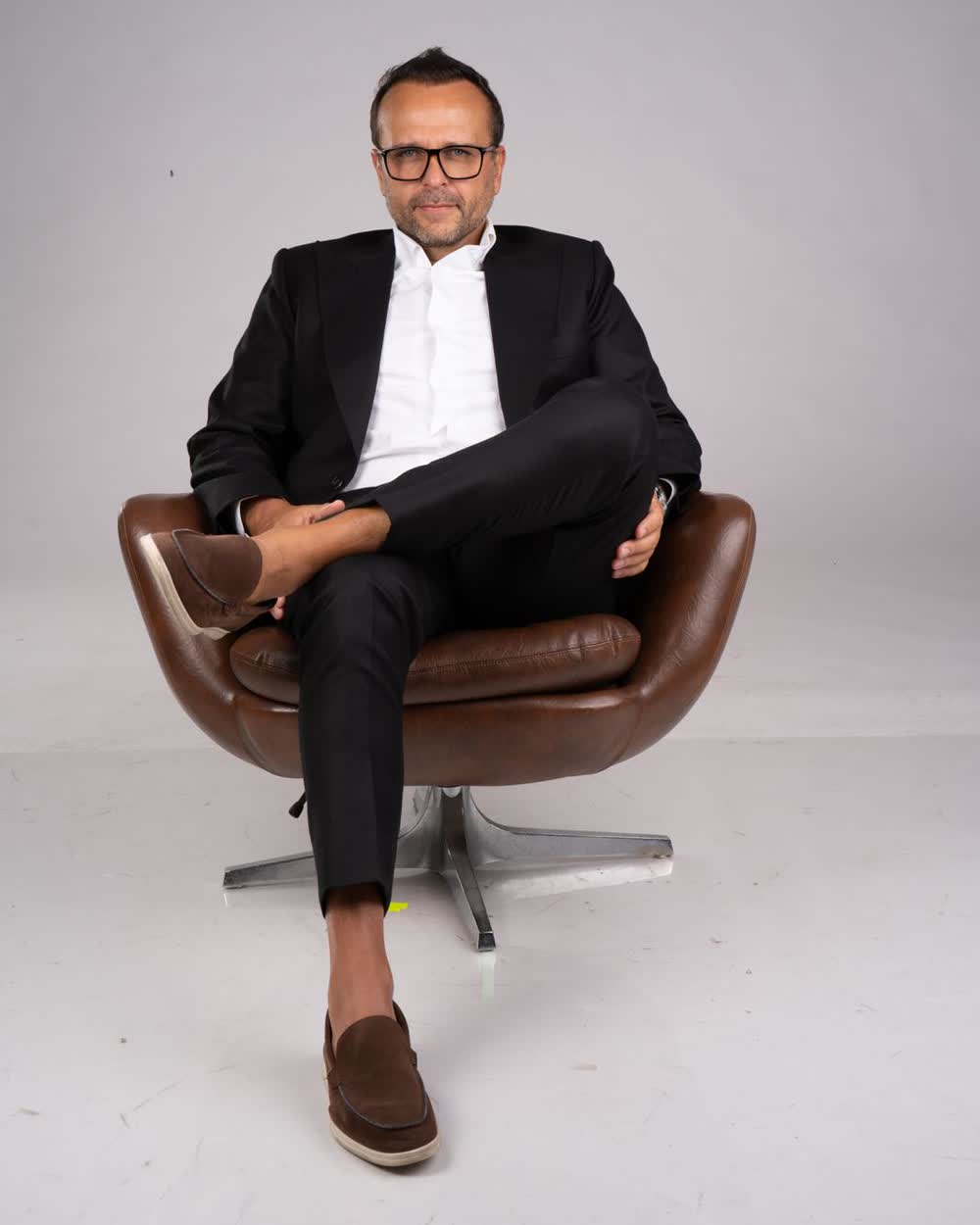
I am not a consultant. I am not a professional facilitator. I am the Chairman of this table. The role you, as majority shareholder, never had at home.
Three board meetings a year.
Two intensive days each.
The table meets three times a year behind closed doors, with roughly a hundred days between each meeting. Arrival the evening before, two full days of work, departure at the end of the second day. No clients, no phone, no distraction. The exact dates for each edition are fixed at the start of the year, so everything else can be scheduled around them.
Between meetings.
Roughly a hundred days between each gathering. A private channel between the ten members and Rui. For when a decision cannot wait until the next meeting. For when you need a fast opinion from someone who knows what you are talking about.
Where it meets.
Each meeting in a different place. The Algarve. The Alentejo. The Douro. Places where the phone has little reason to ring and the conversation has time to get where it needs to go.
The value is not in the room.
It is in the hundred-day cycle.
Roughly a hundred days pass between each meeting. What makes Private Board work is not the time in the room. It is the method that exists around it. Three phases. For each owner, in each cycle.
The report nobody ever made you write.
Before each meeting, you prepare a detailed report on the state of your company. Revenue. Costs. EBITDA. Accounting. Shareholders and structure. Growth. People, functional org chart, culture. It is the report you would present to a real board, if you had one. Here, you will do it three times a year. The exercise is demanding, and half the value is in it.
Ninety minutes in front of the table.
At the meeting, you get ninety to a hundred minutes for your company alone. The other nine members have read the report in advance. The Chairman runs the session. You present the current state, the problems on the table, and the agenda you bring. The table gives back insight, hard questions and perspective, as though each of them had a million invested in your business.
A hundred days to deliver.
You leave the meeting with commitments made publicly in front of the table. What you will focus on and what you will deliver over the next hundred days. At the following meeting, the Chairman opens your session there: what you promised, did you do it? And what did you learn along the way? This is where the method separates itself from any other owners’ table. Without accountability, no decision gets executed.
Everything said at the table
stays at the table.
The table does not exist without absolute confidentiality. What goes in, stays: numbers, plans, doubts, weaknesses, personal conversations that touch the professional.
Each owner signs a simple confidentiality agreement on joining. It is not legal theatre. It is the formal record of a rule that exists before the paper: what is shared here does not leave here. Not between members, and not outside.
Breaking that rule is the only offence that carries immediate expulsion.
The investment is proportional
to what is at stake.
Private Board costs twenty thousand euros a year, plus VAT, paid before the first meeting. It includes the three board meetings (two intensive days each), support in preparing the reports, follow-up on commitments between meetings, and access to the table’s private channel. Accommodation, meals and travel are each member’s own cost.
€15,000 for the first ten members.
The first ten members pay fifteen thousand euros in the first year, in recognition of the trust it takes to join a first edition. From the second edition onwards, the price is twenty thousand for everyone.
There is no joining fee. There are no extra costs. There is no partial refund: whoever joins, joins for the full year.
If at any point you decide the table is not for you, you leave whenever you want. But the seat is paid for. The table carries on.
Most of the seats
are reserved by invitation.
The first edition of Private Board opens in 2027 with ten seats, all at the founding price (€15,000 in the first year). Most are already reserved by direct invitation, for owners Rui knows closely and whose profile fits.
The remaining seats are open to application. If the thesis behind this table describes you, you can submit your application through the form below. Every application is followed by a one-hour interview with Rui.
If there is mutual fit, there is a seat. If not, there is always the next edition, or Rui’s recommendation of a different path that makes more sense for you at that moment.
Six questions. Twenty minutes.
The application is simple but serious. Answer honestly: the filter happens here, before the interview. You will hear back from Rui personally within two weeks.